Hindu Wedding in the USA: Vivah Ceremony, Marriage License, Priest & Saptapadi Guide
Share
Planning a Hindu wedding in the United States often means bringing together two different systems.
One is Vivah Samskara—the sacred Hindu marriage tradition involving mantras, Agni, family blessings and rituals such as Saptapadi.
The other is the American legal marriage process, which generally requires a marriage license and compliance with the laws of the state or locality where the marriage takes place.
For Hindu couples and families in America, this creates several practical questions:
Is a traditional Hindu wedding legally recognized in the United States?
Can a Hindu priest legally solemnize the marriage?
Do we need a separate courthouse wedding?
How do we find a priest familiar with our regional Hindu tradition?
Which Hindu wedding rituals are actually essential?
This guide explains how Hindu families can preserve the meaning of Vivah while also handling the practical requirements of getting legally married in the United States.
Quick Answer: Can You Have a Traditional Hindu Wedding in the USA?
Yes. Hindu couples can perform a traditional Vivah ceremony in the United States.
Depending on the family's tradition, a Hindu wedding may include rituals such as:
- Ganesh Puja
- Sankalpa
- Kanyadaan
- Panigrahan
- Vivah Homa
- Agni
- Mangal Phera
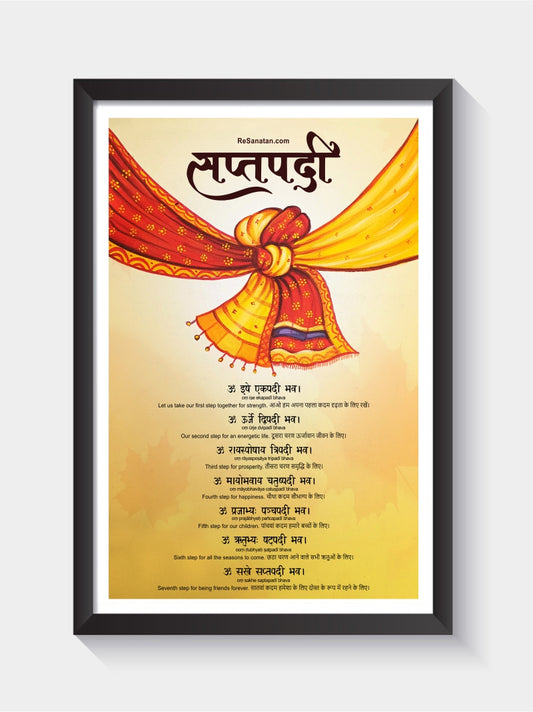
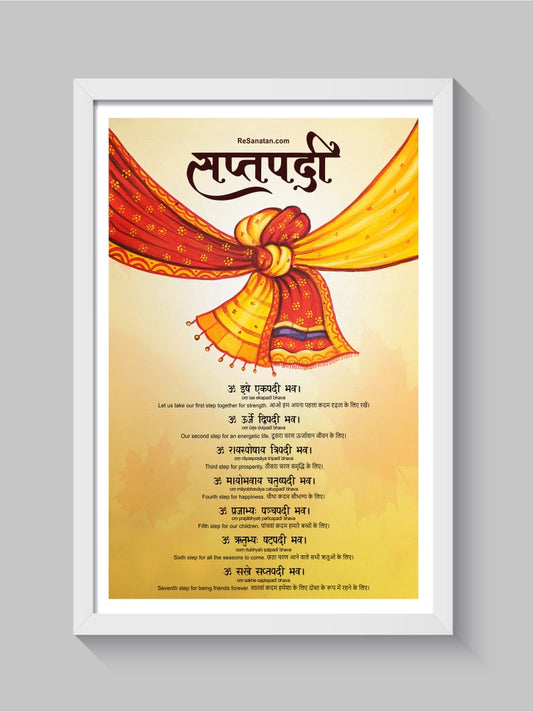
- Saptapadi
- Sindoor
- Mangalsutra
- blessings from elders
However, the religious ceremony and the legal marriage process should be planned together but understood separately.
To make the marriage legally recognized, the couple must satisfy the marriage requirements of the state or locality where the wedding occurs.
These may include:
- obtaining a marriage license;
- using a legally authorized officiant;
- satisfying witness requirements where applicable;
- completing the marriage certificate or license correctly;
- returning or registering the completed documents.
There is no single nationwide marriage-license procedure for all Hindu weddings in the United States.
What Is Vivah Samskara?
Vivah is traditionally regarded as one of the important samskaras of Hindu life.
A Hindu marriage is therefore more than a social celebration.
Within Sanatan tradition, Vivah establishes a partnership through which two people enter the responsibilities of household life and pursue shared duties involving family, dharma and spiritual growth.
The exact ceremony varies greatly across Hindu communities.
A Tamil Hindu wedding may look very different from a:
- Gujarati wedding;
- Bengali wedding;
- Telugu wedding;
- Marathi wedding;
- Kannada wedding;
- Punjabi Hindu wedding;
- North Indian wedding;
- Nepali Hindu wedding.
Practices can also vary according to sampradaya and family tradition.
This is why there is no single universal internet checklist that accurately represents every Hindu wedding.
Your priest should explain which rites belong to your family's tradition.
Is a Hindu Wedding Legally Recognized in the United States?
It can be.
The important distinction is between:
the religious validity of the Vivah, and
the civil requirements for legal marriage.
Performing Saptapadi, taking Pheras or receiving blessings from a Hindu priest does not by itself answer whether every legal requirement has been completed.
Marriage laws are administered at the state and local level in the United States.
Couples should therefore check the official rules for the place where the marriage will occur.
The legal process typically includes obtaining a marriage license before the ceremony and ensuring the appropriate marriage documentation is completed afterward.
What Is the Difference Between a Marriage License and Marriage Certificate?
The terms are often confused.
A marriage license generally gives the couple legal authorization to marry.
A marriage certificate or registered marriage record provides evidence that the marriage has taken place.
The exact terminology and process can differ by jurisdiction.
Couples should use their state or local government's official marriage website to understand:
- where the license is issued;
- when it must be obtained;
- how long it remains valid;
- who may perform the ceremony;
- whether witnesses are required;
- how the completed documentation is returned.
Do Hindu Couples Need a Marriage License?
If the couple wants the marriage legally recognized in the United States, they should comply with the marriage-license requirements applicable where they are getting married.
The procedure may differ depending on the state or county.
Couples may need to consider:
- identification requirements;
- whether both applicants must appear;
- marriage-license fees;
- waiting periods;
- license expiration dates;
- witness requirements;
- authorized officiants;
- how the marriage record is registered.
Do not assume that a procedure followed by relatives in another U.S. state will automatically apply to your wedding.
Can a Hindu Priest Legally Perform the Marriage?
Potentially, yes—but this depends on the jurisdiction and the priest's legal eligibility.
California provides a useful official example.
California recognizes qualifying ordained or invested clergy as persons who may solemnize marriages. The state also explains that the marriage officiant is responsible for properly completing and returning the marriage license for registration.
This means that in some jurisdictions, a Hindu priest may be able to perform both:
the religious Vivah, and
the legally recognized marriage ceremony.
But families should never assume this automatically.
Before booking the priest, ask:
“Can you perform our Hindu Vivah ceremony?”
and separately:
“Are you legally authorized to solemnize our marriage in the state or city where the wedding will occur?”
Those are two different questions.
Do We Need a Separate Courthouse Wedding?
Not necessarily.
If the Hindu ceremony is performed by someone legally authorized to solemnize the marriage and all applicable requirements are fulfilled, a separate courthouse ceremony may not be necessary.
Some couples still choose a separate civil marriage for convenience.
Others complete both the religious and legal marriage in a single ceremony.
The correct approach depends on:
- state law;
- local rules;
- the priest's officiant status;
- timing of the marriage license;
- immigration or documentation needs;
- personal preference.
Check the legal requirements before finalizing the wedding schedule.
How Do You Find a Hindu Wedding Priest in the USA?
A local Hindu temple is often the best starting point.
Many established mandirs in the United States provide priest services for samskaras and life-cycle ceremonies.
This reflects the increasingly important role of Hindu temples in American community life.
For example, Resanatan has reported how Albany Sanatani Mandir in New York is developing into a year-round spiritual and community institution for Hindu families in New York's Capital Region.
Likewise, the Hindu Temple of Greater Chicago illustrates how long-established American mandirs have become multigenerational religious institutions serving Hindu communities across decades.
When contacting a temple for a wedding priest, explain:
- wedding date;
- wedding location;
- family tradition;
- language preference;
- approximate ceremony duration;
- whether the priest must travel;
- whether the priest must also legally solemnize the marriage.
Should the Priest Be Familiar With Our Regional Tradition?
Ideally, yes.
Hindu wedding traditions vary considerably across India and the wider Hindu world.
A family may specifically want a priest familiar with:
- Telugu traditions;
- Tamil traditions;
- Gujarati traditions;
- Bengali traditions;
- Marathi traditions;
- Kannada traditions;
- North Indian traditions;
- Vaishnava traditions;
- Shaiva traditions;
- Smarta traditions;
- another sampradaya or family parampara.
Language may also matter.
Parents or grandparents may prefer ritual explanations in:
- Hindi;
- Tamil;
- Telugu;
- Gujarati;
- Bengali;
- Kannada;
- Marathi;
- another Indian language.
At the same time, couples raised in America may prefer key portions explained in English.
A bilingual priest can be especially helpful at Hindu-American weddings where many guests are unfamiliar with Sanskrit mantras and Hindu wedding symbolism.
What Happens During a Hindu Wedding Ceremony?
There is no single ceremony followed identically by every Hindu family.
However, several rituals are widely recognized across different traditions.
Ganesh Puja
Many Hindu wedding ceremonies begin by invoking Lord Ganesha and seeking blessings for an auspicious beginning.
Sankalpa
The priest may guide the couple or family through a formal statement of intention for the ceremony.
Kanyadaan
Some Hindu traditions include Kanyadaan as part of the marriage rites.
Its form and interpretation can vary significantly between communities.
Panigrahan
Panigrahan involves the ceremonial taking of the hand and appears in several Vedic wedding traditions.
Vivah Homa
Sacred fire plays an important role in many Hindu weddings.
Offerings are made into Agni while mantras accompany the marriage rites.
Mangal Phera
In many traditions, the couple circumambulates the sacred fire.
The number and meaning of these circumambulations can differ by community.
Saptapadi
Saptapadi, or the seven steps, is one of the best-known elements of Hindu Vivah.
The couple takes seven steps associated with commitments made for their married life.
Sindoor and Mangalsutra
Some traditions include applying Sindoor and tying a Mangalsutra.
These customs are important in many Hindu communities but are not universal to every Hindu wedding.
What Does Saptapadi Mean?
Saptapadi literally refers to seven steps.
It is one of the most widely recognized Hindu wedding rituals.
The bride and groom take seven steps together, traditionally accompanied by Vedic mantras.
Modern summaries often describe the seven steps in terms of commitments relating to:
- nourishment;
- strength;
- prosperity;
- happiness;
- family;
- longevity;
- friendship and companionship.
However, exact translations and ritual interpretations can vary.
Rather than relying entirely on simplified social-media explanations of the “seven vows,” ask your priest to explain the actual mantras that will be used during your ceremony.
That can make the ritual far more meaningful for the couple.
Why Is Agni Important in a Hindu Wedding?
Agni, the sacred fire, has a central role in many Hindu Vivah traditions.
Offerings may be made into the fire while mantras are recited.
The couple may also circumambulate Agni as part of the ceremony.
For Hindu couples raised in America, understanding why Agni is present can help transform the wedding from a sequence of unfamiliar rituals into a meaningful spiritual experience.
Ask the priest to explain the major ceremonies in advance.
Does Every Hindu Wedding Have Seven Pheras?
No.
This is a common misconception.
Hindu wedding traditions vary significantly.
Some communities prominently perform seven circumambulations around Agni.
Others follow different ritual sequences or numbers of circumambulations.
Similarly, not every Hindu wedding has identical:
- vows;
- Mangalsutra traditions;
- Sindoor practices;
- clothing;
- ceremony order;
- duration.
Families should preserve their actual tradition rather than modifying it simply because another style of Hindu wedding is more familiar to an American wedding planner or appears more frequently in movies.
How Long Does a Hindu Wedding Ceremony Take?
There is no standard duration.
Some traditional ceremonies can last several hours.
Many Hindu-American couples choose a more condensed ceremony to accommodate:
- venue schedules;
- guests unfamiliar with Hindu rituals;
- reception timing;
- practical constraints.
Before shortening the ceremony, ask the priest:
Which rituals are essential in our tradition?
and:
Which elements can reasonably be condensed?
This is preferable to allowing a venue or planner to remove ceremonies without understanding their religious importance.
Can a Hindu Wedding Take Place Outside a Temple?
Often, yes.
Hindu weddings in the United States commonly take place at:
- Hindu temples;
- hotels;
- banquet halls;
- wedding venues;
- community centers;
- private homes;
- outdoor venues.
However, Hindu ceremonies involving Havan or sacred fire require advance coordination with the venue.
What Should We Ask the Venue About Havan?
This is particularly important in the United States.
Hotels and banquet facilities can have strict open-flame and fire-safety rules.
Tell the venue well in advance that the ceremony may include a ritual fire.
Ask about:
- open-flame policies;
- smoke detectors;
- ventilation;
- fire-alarm systems;
- fire permits;
- fire marshal requirements;
- permitted size of the Havan Kund;
- protective flooring requirements;
- whether venue staff must supervise the fire.
Then share these restrictions with the priest.
Do not wait until the wedding day to discuss Havan with the venue.
What Hindu Wedding Samagri Will We Need?
The priest should provide the final list.
Depending on the tradition, wedding samagri may include items such as:
- Havan Kund;
- ghee;
- rice;
- grains;
- flowers;
- fruits;
- coconuts;
- Kalash;
- sacred thread;
- cloth;
- lamps;
- Kumkum;
- turmeric;
- betel leaves;
- nuts;
- other ritual items.
Avoid purchasing a generic wedding kit until the priest confirms exactly what is required.
Regional and sampradaya traditions can differ substantially.
Can an Interfaith Couple Have a Hindu Wedding?
Many interfaith couples incorporate Hindu ceremonies into their marriage.
However, the religious approach can depend on:
- the priest;
- temple;
- sampradaya;
- family tradition.
Discuss the situation before booking the priest.
Important questions may include:
- which ceremonies can be performed;
- whether any preparation is expected;
- whether both traditions will be included;
- whether the priest can legally solemnize the marriage;
- how the Hindu rituals will be explained.
Different temples and priests may follow different policies.
What About Same-Sex Hindu Weddings in the USA?
Civil marriage for same-sex couples is legally recognized in the United States.
Whether a particular Hindu temple or priest performs a religious Vivah ceremony for a same-sex couple is a separate matter determined by that institution, priest or tradition.
Couples should therefore distinguish between:
civil legal eligibility, and
religious ceremony policies.
Contact the specific temple or priest directly.
Can We Choose a Hindu Wedding Muhurat in the USA?
Yes.
Families that follow Vivah Muhurat may consult a Hindu priest or astrologer.
But Hindu families in America should remember an important point:
Do not simply take a wedding Muhurat calculated for India and convert it into U.S. time.
Panchang calculations depend on the actual location.
Resanatan has already explained this issue in its Raksha Bandhan 2026 USA date and Muhurat guide, where Hindu festival observance dates in several U.S. cities differ from commonly quoted India-based dates.
The same principle matters when calculating an auspicious wedding Muhurat.
Give the priest or astrologer the actual city where the wedding will take place.
Hindu Wedding Planning Checklist for the USA
A practical planning sequence is:
- Choose the wedding city and state.
- Check the official marriage-license requirements for that jurisdiction.
- Find a Hindu priest familiar with your tradition.
- Confirm whether the priest is legally authorized to solemnize the marriage there.
- Discuss the complete Vivah ritual sequence.
- Ask which rituals are essential and how long the ceremony will take.
- Obtain a location-specific Muhurat if your family follows Muhurat.
- Confirm Havan and open-flame rules with the venue.
- Get the complete Samagri list from the priest.
- Decide whether important rituals should also be explained in English.
- Obtain the marriage license within the required time window.
- Confirm any witness requirements.
- Make sure the officiant completes and returns the marriage documentation correctly.
Frequently Asked Questions
Is a Hindu wedding legal in the USA?
A Hindu ceremony can be part of a legally recognized marriage when the couple also satisfies the marriage laws of the jurisdiction where the wedding occurs.
Can a Hindu priest perform a legal wedding in America?
Potentially yes. Whether the priest can legally solemnize the marriage depends on the laws of the relevant state or locality and the priest's legal status as an officiant.
Do Hindu couples need a separate courthouse wedding?
Not necessarily. If an authorized officiant performs the Hindu wedding and all legal requirements are completed, a separate courthouse ceremony may not be needed.
Where do we obtain a marriage license?
Marriage licenses are generally issued through the relevant local or state government authority. Check the official government website for the place where you intend to marry.
Is Saptapadi part of every Hindu wedding?
Saptapadi is an important part of many Hindu wedding traditions, but Hindu ceremonies vary. Follow the tradition and ritual sequence advised by your priest.
Does every Hindu wedding have seven Pheras?
No. The number and sequence of circumambulations can vary among Hindu communities.
Can a Hindu wedding be held in a hotel?
Yes, but any Havan or ritual fire should be approved by the venue in advance.
How can we find a Hindu wedding priest in America?
Contacting a local Hindu temple is often the best starting point. Ask whether the temple's priests perform Vivah ceremonies and whether someone is familiar with your regional tradition.
Can a Hindu wedding ceremony be explained in English?
Yes. Many Hindu-American couples ask their priest to explain important rituals such as Agni, Panigrahan and Saptapadi in English so guests can understand their significance.
Can we use an India-based wedding Muhurat in the USA?
Do not simply convert an India-based Muhurat into U.S. clock time. Ask for a Panchang calculation for the actual U.S. wedding location.
Preserving Vivah Samskara in America
A Hindu wedding in the United States does not have to choose between Sanatan tradition and American legal requirements.
Both can be respected.
The religious side involves:
- understanding the family's Vivah tradition;
- selecting the appropriate priest;
- preserving important samskaras;
- helping the couple understand the meaning of the rituals.
The practical side involves:
- obtaining the correct marriage license;
- confirming the priest's officiant status;
- coordinating Havan requirements with the venue;
- ensuring the marriage paperwork is correctly completed.
As Hindu communities establish deeper roots throughout the United States, Vivah is another important example of Sanatan Dharma continuing across generations.
The venue may be in New York, New Jersey, California, Texas or Illinois.
The legal system may be American.
But Agni, mantras, Saptapadi, family blessings and the understanding of marriage as a Dharmic partnership can continue to connect Hindu couples with a tradition carried forward for generations.