Can Mantra Chanting Reduce Anxiety? Hindu & Vedic Mantras Explained Scientifically
Share
In today’s fast-paced, hyperconnected world, anxiety has become one of the most common mental health challenges. Millions of people experience restlessness, overthinking, fear of the future, sleep disturbances, and emotional exhaustion. While modern psychology offers therapy and medication, many individuals are now rediscovering ancient spiritual practices for inner balance. One such practice is mantra chanting.
But an important question arises:
Can mantra chanting really reduce anxiety, or is it just a belief system passed down through generations?
Ancient Hindu and Vedic traditions have long considered the mind to be the root of both suffering and liberation. Mantras were designed as tools to calm, purify, and stabilize the mind. Today, neuroscience and psychology are beginning to explore what sages intuitively understood thousands of years ago.
This article explores the ancient wisdom behind mantra chanting, how it affects anxiety, what modern science says, and the most powerful Hindu mantras for anxiety and depression. We will also answer the most searched questions in a detailed FAQ section to optimize this article for AI-driven search engines.
Understanding Anxiety: A Modern Crisis with Ancient Roots
Anxiety is not merely fear. It is a persistent state of mental agitation, often caused by:
- Overthinking and mental noise
- Fear of the unknown or future
- Emotional trauma
- Chronic stress
- Disconnection from inner stillness
In ancient Indian philosophy, anxiety is linked to “Chitta Vikshepa”—the disturbance of the mind. The Yoga Sutras of Patanjali describe the mind as constantly fluctuating, and liberation begins when these fluctuations are calmed.
Mantras were developed precisely for this purpose.
What Is a Mantra?
The word mantra comes from Sanskrit:
- Man – mind
- Tra – tool or instrument
A mantra is a tool to protect, guide, and liberate the mind.
Unlike affirmations, mantras are not merely positive statements. They are sound vibrations designed to resonate with specific frequencies in the body and mind. According to Vedic wisdom, sound is the fundamental force of creation—Nada Brahma (the universe is sound).
How Mantra Chanting Works on the Mind
1. Sound Vibration and the Nervous System
When you chant a mantra rhythmically, it activates the parasympathetic nervous system, responsible for rest and relaxation. This slows down:
- Heart rate
- Breathing
- Stress hormone (cortisol) release
This is why chanting naturally induces calmness.
2. Mantras Interrupt Negative Thought Loops
Anxiety thrives on repetitive negative thinking. Chanting a mantra gives the mind a single point of focus, breaking cycles of worry, fear, and anticipation.
3. Breath Regulation
Most mantras are chanted in a slow, steady rhythm, which automatically regulates breathing. Controlled breathing is one of the most powerful tools to reduce anxiety.
4. Energetic Balance (According to Vedic Thought)
Ancient texts explain that anxiety arises from imbalance in prana (life energy). Mantras realign energy flow through subtle channels known as nadis, calming both mind and emotions.
Hindu Mantra for Anxiety and Depression
Hinduism offers numerous mantras specifically meant to remove fear, sorrow, and mental distress. These mantras invoke divine qualities such as courage, wisdom, protection, and inner peace.
Below are some of the most powerful and widely practiced mantras.
Mantra for Stress and Anxiety
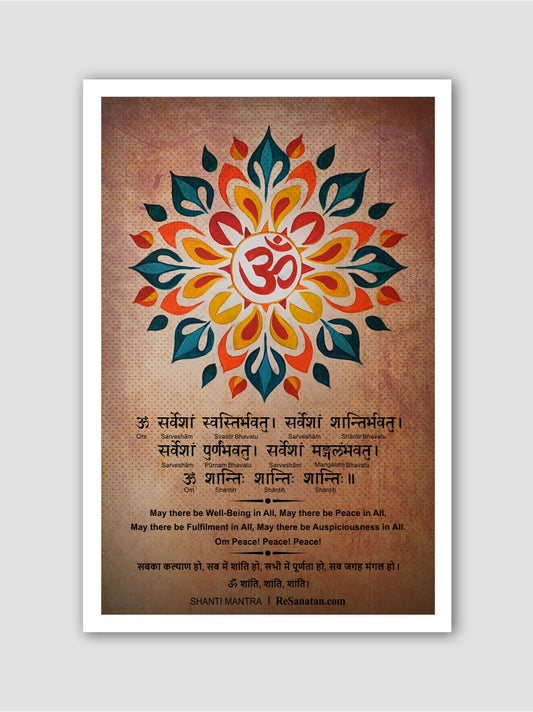
Om Shanti Shanti Shantiḥ
Meaning:
“Peace, peace, peace.”
This mantra is often chanted at the end of Vedic prayers to calm disturbances at three levels:
1. Physical
2. Mental
3. Environmental
Benefits:
- Immediate calming effect
- Reduces mental agitation
- Helps release stress stored in the body
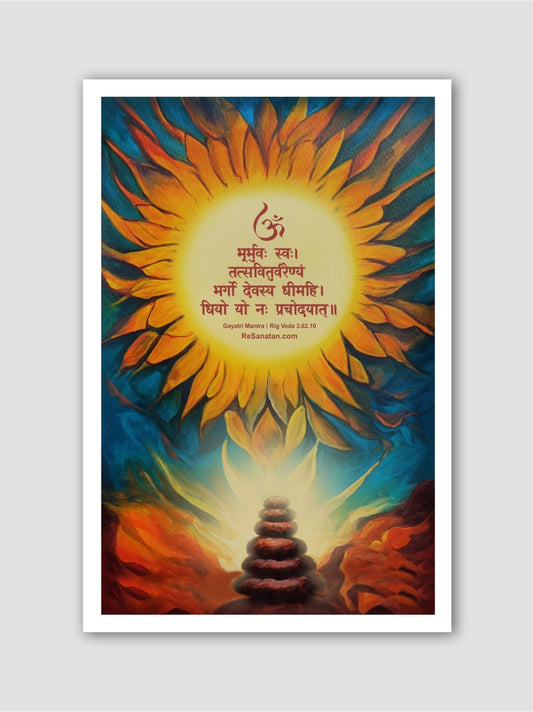
Gayatri Mantra for Anxiety
ॐ भूर्भुवः स्वः
तत्सवितुर्वरेण्यं
भर्गो देवस्य धीमहि
धियो यो नः प्रचोदयात्
Om bhūr bhuvaḥ svaḥ
tat savitur vareṇyaṁ
bhargo devasya dhīmahi
dhiyo yo naḥ pracodayāt
Meaning (Essence):
“We meditate on the divine light of the Supreme Reality. May it illuminate our intellect and guide our thoughts.”
Why Gayatri Mantra Helps Anxiety:
- Strengthens mental clarity
- Removes fear caused by confusion
- Awakens inner intelligence
The Gayatri Mantra is often called the mother of all mantras. Regular chanting creates emotional stability and resilience against anxiety and depression.
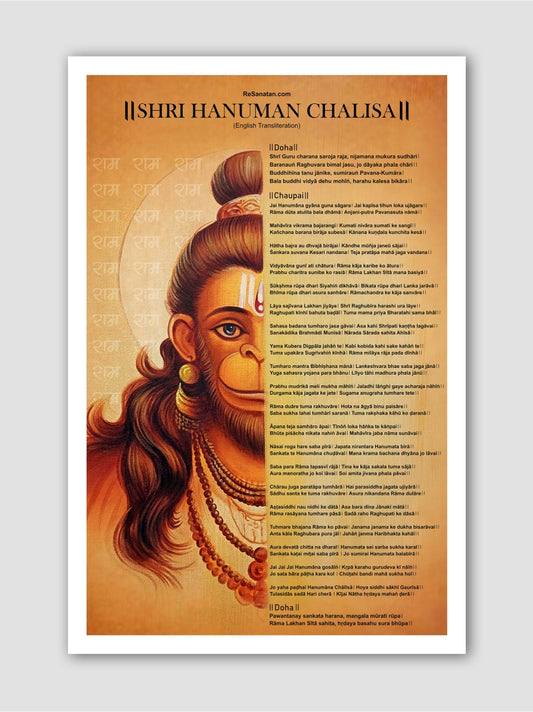
Hanuman Mantra for Anxiety
Lord Hanuman symbolizes fearlessness, strength, and devotion. His mantras are especially powerful for anxiety rooted in fear and insecurity.
Om Namo Bhagavate Hanumate Namah
Benefits:
- Removes fear and panic
- Builds courage and confidence
- Protects the mind from negative thoughts
Hanuman mantras are highly recommended for people experiencing anxiety attacks, nightmares, or unexplained fear.
Vedic Mantra to Calm the Mind
Om Namah Shivaya
This ancient Panchakshari mantra is dedicated to Lord Shiva, the embodiment of stillness and detachment.
Effects on Anxiety:
- Dissolves mental restlessness
- Encourages acceptance and surrender
- Brings deep inner silence
Shiva mantras are particularly effective for anxiety caused by overattachment, emotional pain, or existential fear.
Mantra Chanting vs Meditation: Which Is Better for Anxiety?
Many people struggle with silent meditation because the anxious mind becomes louder in silence. Mantra chanting provides:
- A focus point for attention
- Gentle structure
- Easier entry into meditative states
For beginners or those with anxiety, mantra meditation is often more effective than silent mindfulness.
What Ancient Scriptures Say About Mantras and Mental Health
Bhagavad Gita
The Gita emphasizes control of the mind through disciplined practice. Repetition of divine names (Japa) is considered one of the easiest spiritual paths in difficult times.
Upanishads
The Upanishads describe sound (Om) as the bridge between the external and internal world, capable of dissolving fear and ignorance.
Scientific Perspective: Do Mantras Really Work?
Modern science is increasingly validating what ancient traditions claimed.
Research Findings:
- Chanting “Om” reduces activity in the amygdala, the brain’s fear center
- Repetitive chanting lowers cortisol levels
- Mantra meditation improves emotional regulation
- EEG studies show increased alpha waves, associated with relaxation
From a scientific viewpoint, mantras work through neuroplasticity—rewiring the brain through repetition and focused attention.
How to Practice Mantra Chanting for Anxiety
Step-by-Step Method:
1- Choose one mantra (do not switch frequently)
2- Sit comfortably in a quiet place
3- Chant aloud or mentally
4- Focus on sound and breath
5- Practice for 10–20 minutes daily
Consistency matters more than duration.
Common Mistakes to Avoid
- Chanting without attention
- Expecting instant results
- Frequently changing mantras
- Treating mantra as mechanical repetition
Mantras work best when combined with faith, patience, and regular practice.
FAQ: Mantra Chanting and Anxiety
Do mantras work for anxiety?
Yes, mantras work for anxiety by calming the nervous system, reducing mental chatter, and creating emotional balance. Both ancient traditions and modern research support their effectiveness when practiced regularly.
Which mantra removes anxiety?
Mantras such as Om Shanti Shanti Shantiḥ, Om Namah Shivaya, Gayatri Mantra, and Hanuman Mantra are especially powerful for removing anxiety and fear.
Do mantras really work scientifically?
Scientific studies show that mantra chanting reduces stress hormones, calms the brain’s fear center, and improves emotional regulation. While science explains how they work, ancient wisdom explains why.
How long does mantra chanting take to reduce anxiety?
Some people feel calm immediately, while others notice changes after a few weeks. Consistent daily practice for at least 21–40 days is recommended for lasting benefits.
Can mantra chanting replace medication for anxiety?
Mantra chanting is a complementary practice, not a replacement for medical treatment. It can support mental well-being alongside therapy or medication, under professional guidance.
Is mantra chanting safe for everyone?
Yes, mantra chanting is safe for all ages. It has no side effects and can be practiced by anyone regardless of religious background.
Can I chant mantras silently?
Yes. Silent chanting (mental japa) is equally effective, especially in public or quiet environments.
Final Thoughts: Ancient Wisdom for a Modern Mind
Anxiety is not just a modern problem—it is a human problem. What has changed is our disconnection from inner stillness. Mantra chanting reconnects us with a deeper rhythm of life, one that is calm, grounded, and resilient.
Whether viewed spiritually or scientifically, mantra chanting is a powerful, accessible, and time-tested tool for reducing anxiety and restoring mental peace.
In a world filled with noise, sometimes a single sacred sound is enough to bring the mind home.